

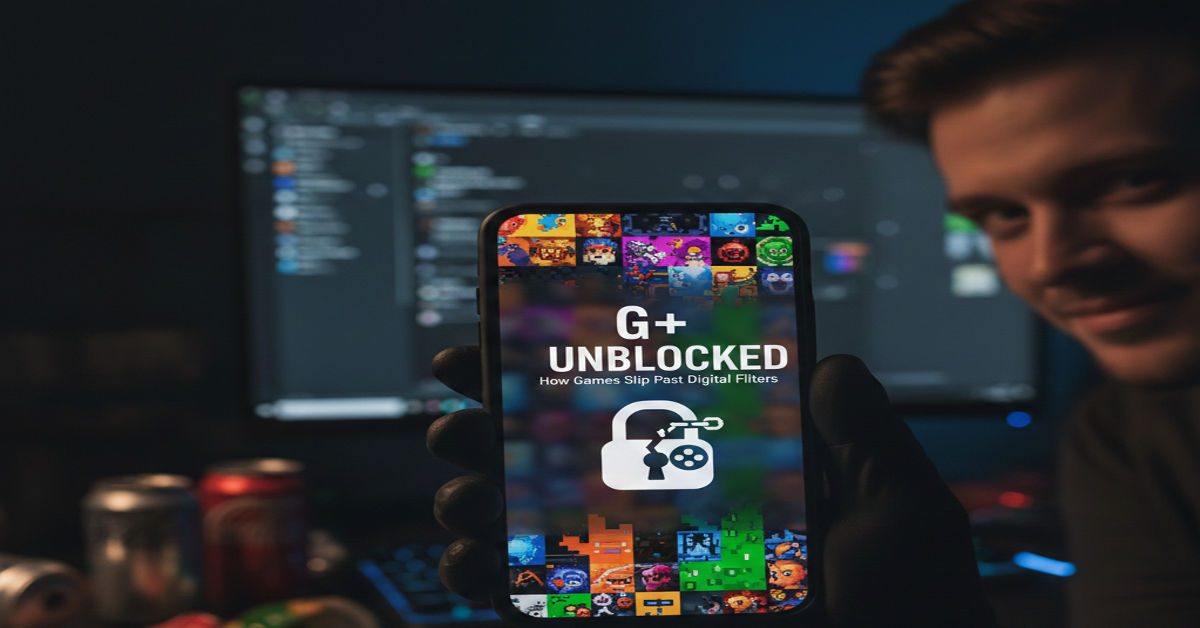
Type “g+ unblocked” into a search bar and you are not looking for a defunct social network. You are likely looking for games—specifically games that bypass institutional filters at schools, libraries, and workplaces. The search intent is clear people want to know what “g+ unblocked” means, why it exists and whether it is safe or legal to use.
The phrase sits at the intersection of two internet eras. “G+” recalls Google Plus, the social network Google launched in 2011 and shuttered in 2019. “Unblocked” belongs to a parallel history: the long-running cat-and-mouse game between network administrators and users seeking entertainment behind digital walls. Together, the term has evolved into shorthand for collections of browser-based games—often hosted on innocuous-looking sites—that evade content filters.
This article explains how “g+ unblocked” emerged, what it tells us about digital control, and why it persists even as platforms change. It examines the technical tricks that make unblocked sites work, the educational and ethical debates they spark, and the broader cultural meaning of sneaking play into controlled spaces. Far from a niche curiosity, “g+ unblocked” offers a window into how young people, institutions, and technology companies continue to negotiate freedom and restraint online.
The Origins of “G+” and a Name That Outlived Its Platform
Google Plus launched in June 2011 with lofty ambitions: to rival Facebook by organizing social connections into “Circles.” Backed by Google’s ecosystem, it briefly attracted tens of millions of users. Yet engagement lagged, privacy concerns mounted, and by October 2018 Google announced it would shut the service down after exposing data from up to 500,000 accounts (Conger & Wakabayashi, 2018).
When Google Plus closed in April 2019, “G+” should have faded with it. Instead, the shorthand lingered—detached from its original meaning. In gaming communities, particularly among students, “g+” began appearing in site names and search queries as a kind of camouflage. To automated filters, “gplus” or “g+” looked like a benign Google property, not a gaming hub.
This linguistic afterlife reflects how internet users repurpose corporate brands long after official support ends. As media scholar danah boyd has argued, young people often exploit the gaps between how adults design systems and how youth actually use them (boyd, 2014). “G+ unblocked” is less about Google Plus itself than about borrowing its ghost to slip past digital gatekeepers.
What “Unblocked” Really Means in Practice
In schools and libraries, content filtering is typically enforced through DNS blocking, IP blacklists, or category-based filtering software. Games are often grouped with “non-educational” or “time-wasting” content and blocked wholesale. “Unblocked” sites work by avoiding those categories or constantly changing domains to stay ahead of blacklists.
Technically, many unblocked games rely on HTML5 rather than Flash, which browsers and filters increasingly restrict. They are lightweight, run entirely in-browser, and often hosted on general-purpose platforms like GitHub Pages or Google Sites—services that institutions are reluctant to block because they also host legitimate educational material.
A 2020 report by the Electronic Frontier Foundation noted that overbroad filtering can inadvertently block useful resources, pushing students to seek workarounds (EFF, 2020). “Unblocked” does not mean illegal hacking; it often means exploiting the bluntness of filtering systems that prioritize safety over nuance.
Why Schools Block Games—and Why Students Push Back
Educators cite clear reasons for blocking games: distraction, reduced productivity, and concerns about inappropriate content. According to Education Week, more than 90 percent of U.S. school districts use some form of content filtering, often mandated by the Children’s Internet Protection Act (CIPA) (Herold, 2019).
Students, however, experience these restrictions differently. For many, especially during long school days or remote learning periods, short bursts of play function as stress relief. Psychologist Peter Gray has written that play is not the opposite of learning but a driver of it, supporting creativity and problem-solving (Gray, 2013).
This tension fuels the popularity of “g+ unblocked” sites. They are not just about defiance; they are about reclaiming autonomy in environments where digital choices are tightly constrained. The persistence of these sites suggests that blanket bans may fail to address underlying needs.
A Snapshot of Common “G+ Unblocked” Game Types
| Game Type | Examples | Why They Slip Through Filters |
| Puzzle & Logic | 2048, Sudoku variants | Low data use, educational tags |
| Retro Arcade | Pac-Man clones, Snake | Minimal graphics, nostalgia |
| Physics-based | Slope, Run 3 | HTML5, no external assets |
| Idle/Incremental | Cookie Clicker-style games | Text-heavy, low interactivity |
These games share characteristics that make them filter-resistant: simple code, innocuous descriptions, and hosting on trusted domains. Their design aligns with constraints rather than fighting them directly.
Safety, Privacy and the Real Risks
Not all unblocked sites are benign. Some monetize through aggressive advertising, trackers, or misleading download prompts. Common Sense Media warns that unofficial gaming sites may expose children to data collection practices that would not pass scrutiny on mainstream platforms (Common Sense Media, 2021).
There is also the risk of malware, particularly on sites that imitate legitimate brands. Network security firm Kaspersky has documented cases where “free game” portals served malicious scripts under the guise of browser games (Kaspersky, 2020).
For parents and educators, the challenge is distinguishing between relatively harmless browser games and genuinely risky sites. Blocking everything may feel safer, but it can also drive users toward less transparent corners of the web.
Expert Perspectives on Digital Gatekeeping
“Over-filtering doesn’t eliminate desire; it just changes behavior,” said Dr. Emily Weinstein, a researcher at Harvard’s Center for Digital Thriving. “Young people become more secretive, not less curious” (Weinstein, 2022).
Similarly, Cory Doctorow, author and digital rights activist, has argued that restrictive systems often create “adversarial interoperability,” where users invent workarounds to regain lost functionality (Doctorow, 2020).
Educational technologist Michael Horn adds a pragmatic note: “If schools treated short, structured play as part of learning rather than a threat, the arms race around unblocked sites might lose steam” (Horn, 2021).
These perspectives frame “g+ unblocked” not as a problem to eradicate but as a signal of misaligned incentives.
The Evolution of Unblocked Games Over Time
| Era | Technical Shift | Cultural Context |
| Early 2000s | Flash-based games | Desktop labs, minimal filtering |
| 2010–2015 | Proxy sites, mirror domains | Rise of social media |
| 2016–2020 | HTML5, Google Sites, GitHub | Chromebook classrooms |
| 2021–Present | Progressive web apps, embeds | Remote learning normalization |
Each phase reflects changes in both technology and institutional control. As platforms evolve, so do the tactics of unblocked sites, borrowing legitimacy from mainstream tools.
Cultural Meaning: Play as Resistance and Adaptation
Anthropologists have long noted that play often flourishes under constraint. From prison chess sets to office mini-games, humans find ways to carve out leisure. “G+ unblocked” belongs to this lineage. It is less about rebellion than adaptation—using the tools at hand to meet psychological needs.
During the COVID-19 pandemic when screen time soared and boundaries blurred, the distinction between “productive” and “wasted” time became harder to police. A 2021 Pew Research Center study found that 59 percent of teens said online games helped them feel connected to friends during isolation (Pew, 2021). In that context, blocking games entirely can feel out of step with lived experience.
Takeaways
- “G+ unblocked” is a cultural shorthand, not a reference to active Google Plus services.
- The term reflects ongoing tension between institutional filtering and user autonomy.
- Unblocked games rely on technical subtlety rather than overt hacking.
- Overbroad blocking can push users toward riskier online spaces.
- Play has documented cognitive and emotional benefits, even in short bursts.
- The persistence of unblocked sites signals unmet needs in controlled environments.
Conclusion
“G+ unblocked” may sound like internet detritus—a leftover acronym glued to a minor loophole. Yet its endurance tells a larger story about how people navigate digital power structures. Institutions build filters to protect, manage, and optimize. Users respond not with surrender but with creativity, repurposing tools and language to reclaim small freedoms.
As technology becomes more embedded in education and work, the question is not whether people will seek play, but how systems will accommodate it. Treating unblocked games solely as a threat misses an opportunity to rethink balance, trust, and design. The history of “g+ unblocked” suggests that when access is negotiated rather than imposed, the need for circumvention may fade. Until then, a few lines of HTML5 and a borrowed name from a dead social network will continue to open tiny windows of play where walls once stood.
FAQs
What does “g+ unblocked” mean?
It commonly refers to websites offering browser-based games that bypass network filters, using “g+” as a misleading or nostalgic label.
Is “g+ unblocked” related to Google Plus today?
No. Google Plus shut down in 2019. The term survives independently in gaming contexts.
Are unblocked games legal to play?
Generally yes, but playing them may violate school or workplace acceptable-use policies.
Are unblocked game sites safe?
Some are relatively harmless; others carry privacy or malware risks. Caution is advised.
Why don’t schools just allow games?
Concerns include distraction, equity, and compliance with filtering laws like CIPA.
References
Doctorow, C. (2020). How to destroy surveillance capitalism. OneZero. https://onezero.medium.com
Electronic Frontier Foundation. (2020). Digital learning and student privacy. https://www.eff.org
Herold, B. (2019). Schools are blocking more websites. Education Week. https://www.edweek.org
Horn, M. (2021). Rethinking screen time in schools. Forbes. https://www.forbes.com
Kaspersky. (2020). Malware risks in online gaming. https://www.kaspersky.com
Pew Research Center. (2021). Teens, social media, and gaming. https://www.pewresearch.org
Weinstein, E. (2022). Digital well-being and youth. Harvard Graduate School of Education. https://www.gse.harvard.edu