

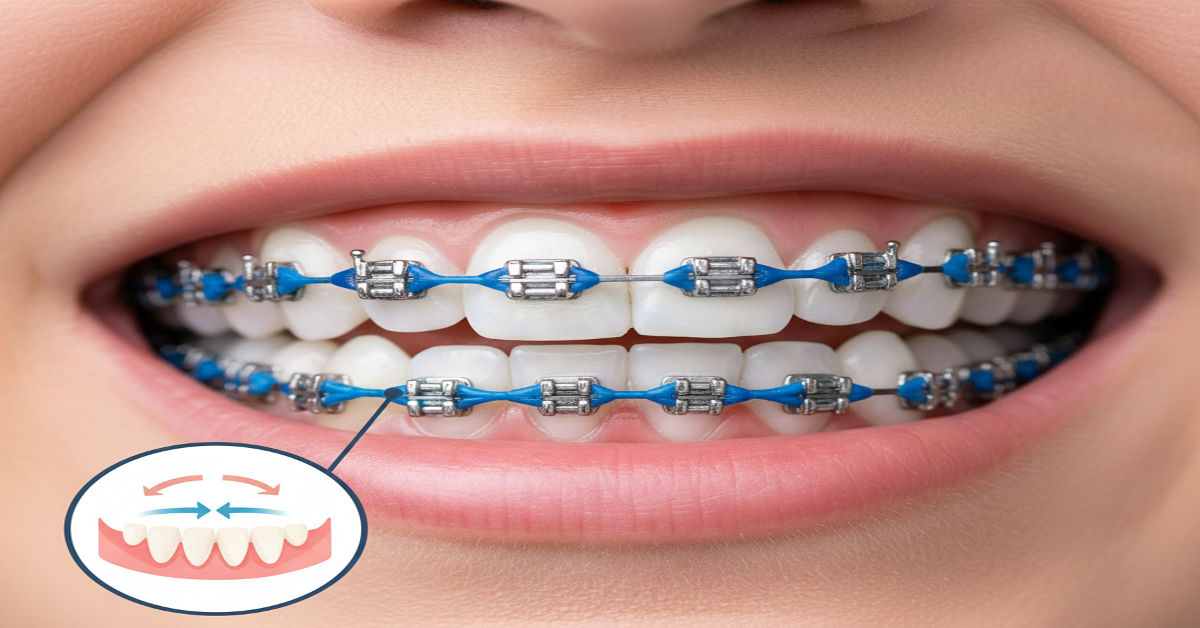
Power chain braces are a specialized component in orthodontic treatment designed to enhance the effectiveness of traditional braces by applying continuous force on teeth, helping close gaps, align misaligned teeth, and refine bite corrections. They are not a standalone orthodontic device but are used in conjunction with brackets and archwires to provide targeted pressure where needed most.
Within the first few sentences, readers often want to understand what power chains are, why orthodontists use them, and how they differ from standard braces components. Power chains typically consist of a series of connected elastic O‑rings that exert a constant pulling force on teeth to guide them into desired positions. They often appear toward the middle or final phases of treatment and are valued for their ability to close spaces, adjust dental midlines, and improve alignment when standard ligatures alone might be insufficient.
Understanding both the clinical rationale and the lived experience of power chain wearers can empower patients to navigate treatment with clearer expectations and better oral health strategies. These seemingly simple elastic links have transformed how orthodontists achieve efficiency and precision in modern dental care.
How Power Chains Work and Why Orthodontists Use Them
Power chains are essentially a string of interconnected elastic rings placed over the brackets of braces. Unlike individual elastic ligatures that encircle each bracket independently, power chains link several teeth together, allowing the orthodontist to exert greater and more uniform force across a segment of the dental arch.
The continuous nature of the chain means that teeth are guided collectively toward closure of gaps or improved alignment, rather than tooth‑by‑tooth adjustments. Orthodontists often employ power chains for:
- Closing extraction gaps: After teeth have been removed as part of a treatment plan, power chains help pull adjacent teeth into the spaces more efficiently.
- Refining final alignment: Toward the end of braces treatment, power chains help perfect spacing and bite relationships.
- Addressing rotations and midlines: By linking selected teeth, power chains can aid in rotating teeth into the correct position and aligning dental midlines more precisely.
The clinician’s choice of power chain type — closed, short, or long — depends on the desired level of force and the spacing between teeth. Closed chains link every tooth, while short and long chains connect every second or third tooth, respectively. Each configuration modulates the distribution and intensity of pressure applied.
Types of Power Chains and Clinical Considerations
| Type of Power Chain | Configuration | Clinical Use |
| Closed | All links connected | Uniform pressure across many teeth, ideal for widespread gap closure |
| Short | Every second tooth linked | Moderate force, targeted alignment |
| Long | Every third tooth linked | Lower force, early or nuanced adjustments |
| Segmental | Applied to a specific segment | Focused movement without affecting entire arch |
Selecting the appropriate type involves evaluating dental alignment, the presence of spaces, crowding, and overall orthodontic goals. Power chains also come in various strengths and sizes, further fine‑tuning the force delivered to the teeth. Regular adjustment appointments ensure that the force remains optimal; the elasticity naturally lessens over time due to wear from saliva, chewing, and temperature fluctuations within the mouth.
Patient Experience and Everyday Realities
For many patients, the first encounter with power chains is marked by a noticeable increase in pressure. This sensation is a direct result of the greater force exerted compared with individual ligatures. While discomfort is common, it is generally transient, diminishing within days as teeth begin to adjust. Over-the-counter pain relievers and soft diets are often recommended to ease initial soreness.
Social platforms and patient testimonials reveal a spectrum of experiences: some report rapid gap closure visible within days, while others note discomfort that can temporarily affect chewing and speech. These accounts emphasize that power chains require an adaptation period, but most users find that the sensation normalizes after the first week. Personal experiences also highlight the importance of maintaining oral hygiene, as continuous chains can trap food particles and plaque more readily than standard braces components.
Care, Maintenance and Oral Hygiene
Maintaining oral health while wearing power chain braces demands diligence. Because the continuous elastic spans multiple brackets and teeth, it can create niches where food debris and plaque accumulate. Poor hygiene increases the risk of gum inflammation, decay, and unpleasant odors.
Without consistent cleaning:
- Plaque buildup may form around the chain and brackets.
- Gum irritation can develop if debris remains trapped.
- Tooth decay risk rises, especially in areas harder to access with a toothbrush.
A combination of soft-bristled brushing after meals, flossing with specialized tools like floss threaders, and antimicrobial mouth rinses helps mitigate these risks. Some orthodontists recommend water flossers for more effective cleaning under power chains. Patients should also avoid sticky or hard foods that could strain or break the elastic chain.
Risks, Side Effects and Safety
While power chains are safe and effective when used appropriately, they share certain risks inherent to fixed orthodontic treatment:
| Potential Side Effect | Explanation |
| Discomfort & pressure sensation | Normal response to continuous force; typically temporary |
| Gum inflammation | Plaque accumulation increases irritation risk |
| Tooth decay | Harder to clean around continuous elastics |
| Root resorption | Rare, involves shortening of root structure due to prolonged force |
| Relapse after removal | Teeth may shift back without post-bracing retainers |
Root resorption, though uncommon, is monitored during regular orthodontic checkups via dental X-rays. Retainers after braces removal are essential to prevent relapse of alignment achieved with power chains.
Expert Voices on Power Chain Braces
“Power chains allow us to exert coordinated pressure across multiple teeth, making them indispensable in closing extraction gaps and refining alignment in the final stages of treatment.”
— William Busch, D.M.D., orthodontic director
“Appropriate oral hygiene is paramount with power chains; neglected care can lead to plaque buildup and gum issues that undermine orthodontic outcomes.”
— Hailee Rask, D.D.S., owner of Bluebird Orthodontics
“Choosing the right chain type — closed, short, or long — is a nuanced decision based on spacing needs and desired force distribution.”
— Dental researcher summary
Key Takeaways
- Power chains are connected elastic links used with braces to apply continuous pulling force.
- They are effective at closing gaps, aligning teeth, and fine-tuning dental relationships.
- Different configurations (closed, short, long) tailor force distribution.
- Discomfort and pressure are common initially but usually temporary.
- Oral hygiene is critical due to increased plaque trapping.
- Retainers after braces help maintain alignment achieved with power chains.
- Regular orthodontic adjustments ensure optimal force and minimize risks.
Conclusion
Power chain braces represent a nuanced evolution in orthodontic mechanics, bridging the gap between traditional bracket-and-wire braces and modern expectations for efficient, precise tooth movement. By harnessing continuous elastic force, power chains accelerate gap closure and alignment tasks that individual ligatures alone may struggle to address.
Patients often experience a period of adjustment marked by pressure sensations, but with proper care, the advantages — including reduced treatment timelines and refined results — outweigh temporary discomfort. Maintaining oral hygiene and attending scheduled orthodontic checkups are essential to maximizing benefits and minimizing complications. Power chains exemplify how a seemingly small innovation in dental materials can yield significant functional and aesthetic improvements in orthodontics.
FAQs
What exactly is a power chain in braces?
A power chain is a series of connected elastic rings placed over braces brackets to provide continuous pulling force that closes gaps and aligns teeth.
Do power chains hurt more than regular braces?
They can cause increased pressure and discomfort initially, but pain typically diminishes within a few days as teeth adjust.
How long do power chains stay on?
Depending on individual needs, power chains may be used for weeks to months during treatment to achieve specific alignment goals.
Can I eat normally with power chains?
Soft foods are recommended initially; avoid sticky or hard foods that can damage chains or trap debris.
Will my teeth move back after power chains are removed?
Retention with a retainer post-treatment is essential to prevent relapse of alignment.
References
Healthline. (2023, December 19). Power Chain Braces: Benefits, Side Effects, Types, Maintenance. Retrieved from https://www.healthline.com/health/power-chain-braces
Forbes Health. (2025). Power Chain Braces: What To Know. Retrieved from https://www.forbes.com/health/dental/power-chain-braces/
Dr Haroon Dental Specialist Clinic. (2024). Power Chain Braces Overview. Retrieved from https://dentistpeshawar.pk/teeth-braces-orthodontics/power-chain-braces/
NewMouth. (2025). Power Chain Braces (Types, Costs & Uses). Retrieved from https://www.newmouth.com/orthodontics/treatment/braces/power-chain/
Healthgrades. (2025). Power Chain Braces: Definition, Purpose, and Care. Retrieved from https://resources.healthgrades.com/right-care/orthodontics/power-chain-braces
Elara Orthodontics. (2025). What Are Power Chains For Braces? Retrieved from https://elaraorthodontics.com/blog/what-are-power-chains-for-braces/