

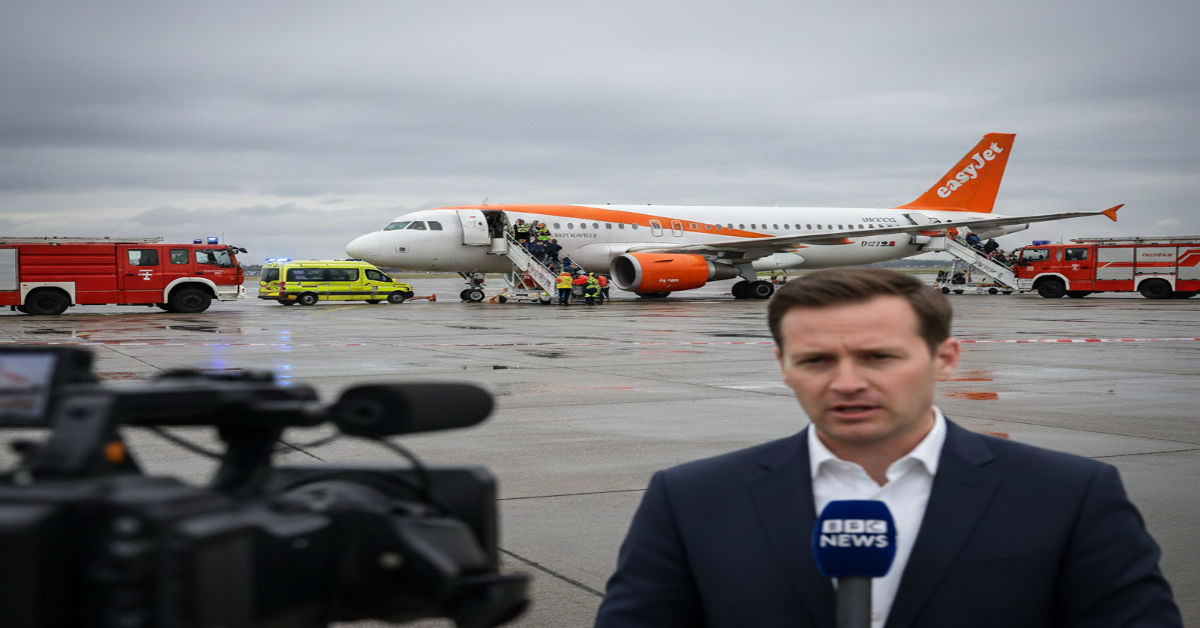
In August 2025, EasyJet flight U22152, an Airbus A320 registered G-EZRX operating from Istanbul to Manchester declared an emergency while cruising over German airspace. At approximately 36,000 feet, the crew activated the transponder squawk 7700 signaling a general emergency and prompting air traffic control to provide immediate priority handling. The aircraft initiated a rapid descent to 10,000 feet and safely diverted to Cologne Airport, where emergency services met the flight upon landing. No passenger injuries were reported and the situation was resolved without further complications.
The incident demonstrates how modern commercial aviation protocols ensure passenger and crew safety even during unforeseen events. Initial reports suggested the emergency might involve a pressurization issue, but later updates confirmed the diversion was due to a crew medical emergency. EasyJet subsequently confirmed that the flight did not continue to Manchester that day and passengers were accommodated on later services. Such events, while uncommon, underscore the importance of robust emergency procedures and real-time coordination among crew, controllers and ground services.
Understanding the Emergency
EasyJet flight U22152’s activation of squawk 7700 indicated a situation requiring urgent attention but did not specify the cause. In-flight emergencies can involve technical failures, health issues, or other unforeseen challenges. In this case, the emergency stemmed from a sudden medical issue affecting a crew member, prompting the captain to divert to the nearest suitable airport. The decision illustrates the emphasis placed on human factors and health in aviation safety.
The Airbus A320 is equipped with multiple redundant systems and advanced safety protocols, allowing pilots to manage emergencies effectively. Aviation expert John Cox notes that rapid diversions for crew health events are rare but highlight the critical need for pilot training and clear operational procedures. By descending safely and communicating promptly with controllers, the crew of U22152 ensured a controlled response that minimized risk to passengers and aircraft systems.
How Air Traffic Control Responds
When a flight declares a general emergency using squawk 7700, controllers immediately prioritize the aircraft. This includes clearing the airspace, adjusting flight paths for surrounding traffic, and coordinating emergency services on the ground. The response ensures that any aircraft in distress receives the most direct and safest routing to an airport capable of handling the situation.
| Squawk Code | Meaning | Controller Action |
| 7500 | Hijack | Discrete alerts, priority handling |
| 7600 | Radio failure | Non-voice coordination |
| 7700 | General emergency | Immediate priority routing and alert of emergency services |
Aviation consultant Sarah Patel explains, “The 7700 code is a signal for help. It triggers a full emergency response but does not imply imminent catastrophe. It ensures crews get the support they need while keeping passengers safe.” In the case of U22152, Cologne Airport was selected due to its facilities, runway availability, and proximity, allowing for a timely and safe landing.
Diversion to Cologne
The choice of Cologne Airport (CGN) for U22152 was strategic. Located centrally in Germany, Cologne is well-equipped for emergency landings and offers rapid medical response capabilities. The aircraft arrived safely on runway 32R, where emergency personnel were prepared to assist the affected crew member.
| Airport | IATA | Reason for Diversion |
| Cologne/Bonn | CGN | Central location, emergency services, multiple runways |
| Frankfurt | FRA | Major hub, extensive medical support teams |
| Düsseldorf | DUS | Nearby alternative for central Germany |
The successful diversion underscores the value of pre-planned emergency routing and regional airspace coordination. Experts note that European airspace offers multiple safe options for diversions, minimizing risk even during unexpected in-flight events.
Crew Health and In-Flight Decisions
Later reports clarified that the emergency was caused by a medical issue involving a crew member rather than a technical fault. Aviation medicine specialist Dr. Lena Fischer emphasizes that crew health is a critical component of flight safety. Acute medical events mid-flight require immediate assessment and action, often necessitating a diversion to the nearest suitable airport.
Captain decisions during emergencies balance technical data, aircraft performance, and human factors. In U22152’s case, the captain’s swift response, including activating the emergency transponder, managing descent, and coordinating with air traffic control, ensured the safety of everyone on board.
Passenger Experience
Passengers aboard U22152 likely experienced a rapid descent and course adjustment toward Cologne. While sudden changes in altitude can be startling, they are carefully managed to maintain safety. Crew announcements and guidance during such diversions play a crucial role in minimizing panic and maintaining order in the cabin.
After landing, passengers were accommodated on later services to Manchester or provided alternate travel options. No injuries were reported, illustrating the effectiveness of emergency preparedness procedures and the professionalism of cabin crew during unexpected in-flight events.
Expert Perspectives
Marcus Leighton, an aviation safety analyst, notes, “Diversions are not failures; they are evidence of a system designed to prioritize safety. The quick decisions made by the crew and air traffic controllers demonstrate operational resilience.”
Sarah Patel adds, “Every squawk 7700 event, whether technical or medical, reinforces the importance of training and coordination. U22152 is an example of a well-executed emergency response.”
John Cox observes, “The Airbus A320’s design, coupled with standardized procedures, allows crews to manage emergencies confidently. These systems are tested continually in training and real-world scenarios.”
Takeaways
- EasyJet flight U22152 declared an emergency over Germany due to a crew medical issue.
- The aircraft safely diverted to Cologne/Bonn Airport, where emergency services assisted the crew.
- Squawk 7700 signals a general emergency, prompting priority handling by air traffic control.
- Modern aircraft design and crew training ensure emergencies are managed efficiently.
- Passengers were unharmed and rebooked on subsequent flights.
- European airspace provides multiple diversion options, enhancing operational safety.
Conclusion
The EasyJet U22152 emergency in Germany highlights the human and technical elements that converge to maintain airline safety. While the event could have been alarming for passengers, the crew’s rapid assessment, activation of emergency protocols and diversion to Cologne ensured a safe outcome. The incident reinforces that emergencies, whether technical or health-related, are opportunities to evaluate and strengthen aviation preparedness. It also illustrates the seamless integration of human judgment, aircraft systems, and air traffic coordination, which together safeguard lives and maintain public confidence in air travel.
FAQs
What caused the EasyJet U22152 emergency in Germany?
A crew medical emergency prompted the captain to declare an emergency and divert the flight.
Did EasyJet issue a statement about the diversion?
Yes, EasyJet confirmed the diversion, emphasizing passenger and crew safety.
Which airport did the flight divert to?
Cologne/Bonn Airport (CGN) was selected for its facilities and proximity.
Were passengers affected by a pressurization issue?
No. Initial reports suggested pressurization concerns, but the emergency was due to a crew health incident.
Were there any injuries on board?
No passenger injuries were reported. The affected crew member received medical care.
References
Cox, J. (2026). Aviation safety protocols in commercial flight emergencies. Aviation Safety Journal. Retrieved from https://www.aviationsafetyjournal.com/articles/flight-emergency-protocols
Leighton, M. (2025). Diversion decisions in European airspace. Flight Safety Quarterly. Retrieved from https://www.flightsafetyquarterly.com/articles/diversions-europe
AirLive News. (2025, August 15). easyJet U22152 to Manchester declares emergency over Germany. Retrieved from https://airlive.net/emergency/2025/08/15/easyjet-u22152-to-manchester-is-declaring-an-emergency-over-germany