

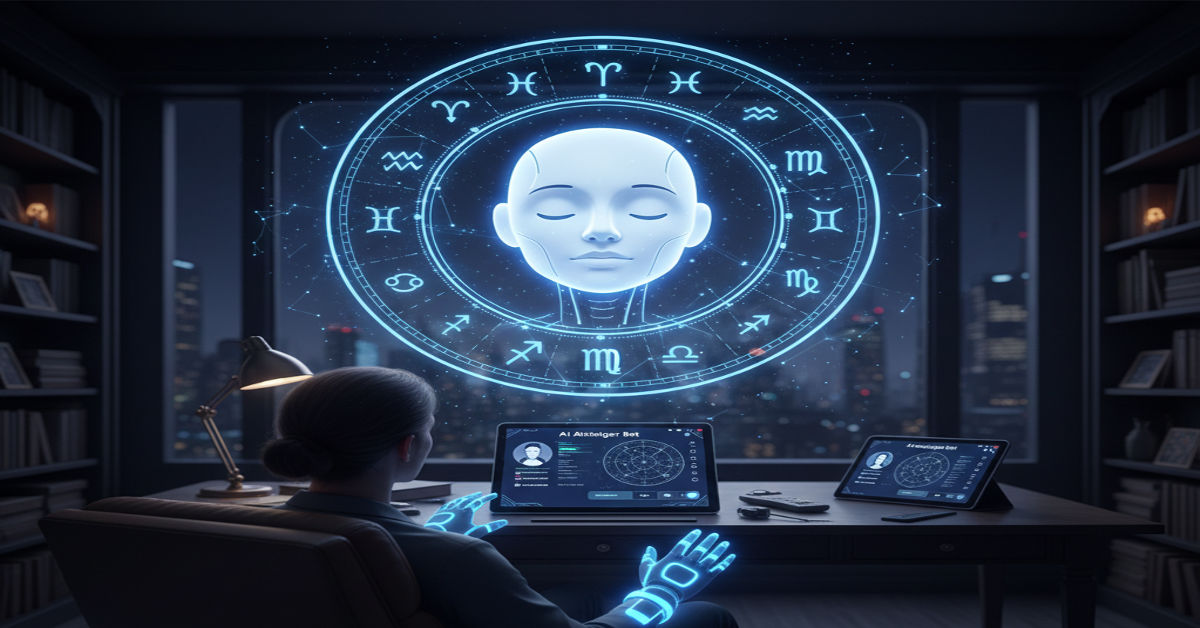
In recent years, astrology has undergone a remarkable transformation. What was once the realm of handwritten charts and appointments with human astrologers is now increasingly the domain of artificial intelligence. Enter the astrologer bot a digital companion capable of delivering personalized readings, birth charts, horoscopes and predictive transit insights all powered by sophisticated AI and astronomical precision. Within seconds, these bots can provide a user-specific cosmic analysis, responding to questions about personality, relationships and life patterns in conversational language.
Astrologer bots are often integrated into AI platforms like ChatGPT or operate as standalone applications. Many leverage precise astronomical data, sometimes derived from NASA’s ephemeris datasets to calculate planetary positions accurately. This allows the bots to offer insights that go beyond generic horoscopes, tailoring interpretations to the user’s exact birth date, time, and location. These platforms promise the accessibility and immediacy of a digital astrologer, while simultaneously raising questions about accuracy, privacy and the preservation of cultural nuance in an AI-mediated environment.
The rise of astrologer bots represents a convergence of tradition and technology: machine intelligence delivering guidance informed by centuries-old astrological frameworks. But while these tools are powerful, their interpretative depth and reliability remain subjects of both excitement and debate among users, practitioners, and experts alike.
The Rise of AI in Astrology
Astrologer bots are the latest evolution in digital astrology, building on decades of online and mobile applications. Early apps, such as Co‑Star, used astronomical data to generate individualized horoscopes, helping users understand personality traits based on planetary positions. Today’s AI-powered bots take this a step further by offering interactive, conversational experiences that can answer follow-up questions, explain chart details, and even provide real-time interpretations of planetary transits.
Platforms like Astrologer Bot and Lagna360 leverage sophisticated algorithms to calculate planetary positions with claimed NASA-grade precision, sometimes accurate to fractions of a degree. These bots often integrate multiple astrological traditions, blending Western and Vedic techniques to offer more comprehensive insights. The AI component allows for dynamic explanations and personalized guidance, creating an experience that feels less like a static chart and more like a dialogue with a knowledgeable astrologer.
This evolution reflects broader technological trends in AI: natural language models capable of contextual understanding, memory retention, and conversational flow, which enable users to engage in a sustained and meaningful dialogue about their cosmic patterns. The result is a digital astrology experience that is both interactive and deeply personalized.
How Astrologer Bots Work
The core functionality of an astrologer bot lies in its ability to combine astronomical precision with interpretative algorithms. Using birth data—date, time, and location—the bot calculates planetary positions and maps them onto a birth chart. Many bots draw on ephemeris data, similar to NASA’s JPL HORIZONS system to ensure accuracy.
Once the chart is generated, AI algorithms interpret these positions, translating complex celestial arrangements into insights about personality, relationships, challenges, and opportunities. Some bots focus on clear, de-jargonized explanations, while others adopt a narrative style to make the reading more engaging.
A unique feature of modern astrologer bots is conversational memory. The AI can retain previous user interactions, allowing follow-up questions and deeper explorations. Multi-agent AI frameworks further enhance functionality by routing different queries—such as predictive transits, synastry, or career guidance—to specialized processing modules.
Comparison of Common Features of Astrologer Bots
| Feature | Description | Typical Benefit |
| Natal Chart Calculation | Computes planetary positions at birth | Personalized insights, accurate charting |
| Horoscopes & Transit Predictions | Current and future planetary effects | Guidance for daily/weekly decisions |
| Compatibility (Synastry) | Comparison of two charts | Relationship and compatibility analysis |
| Conversational Follow-ups | Natural language dialogue | Contextualized, personalized guidance |
Astrologer bots often incorporate multiple astrological systems, from Western tropical astrology to Vedic sidereal and Chinese astrology. This requires sophisticated modeling to ensure calculations remain accurate and interpretations culturally respectful.
Accuracy and Scientific Context
One of the key questions surrounding astrologer bots is their accuracy. While AI excels at precise positional calculations—often matching astronomical data to 0.01°—interpretation remains inherently subjective. A 2026 survey of AI astrology tools suggested that while bots outperform humans in raw computational accuracy, the depth and nuance of interpretative readings are still a human strength.
Where AI shines is in consistency and speed. Using NASA-grade ephemerides, bots can generate charts and forecasts instantly, reducing errors that might occur in manual calculations. However, interpretation is less straightforward. Generic language models may misread certain configurations, producing readings that feel formulaic or superficial.
Comparison of AI vs Traditional Astrology
| Metric | AI Astrology | Traditional Astrologer |
| Planetary Positional Accuracy | High (astronomy-grade) | Moderate (manual error risk) |
| Interpretative Depth | Variable (model dependent) | High (experience-based) |
| Real-time Interaction | Instant | Appointment required |
| Cost per Reading | Low to free | Often higher, varies by practitioner |
Users report a spectrum of experiences: some find AI-generated readings accurate and insightful, while others note inconsistencies when the AI misinterprets chart placements or astrological nuances. The contrast highlights the difference between precise calculation and the interpretative depth cultivated by human expertise.
Benefits and Cultural Impact
Astrologer bots provide accessibility and immediacy, democratizing astrology for audiences who might never consult a human practitioner. Users can explore birth charts, relationship compatibility, or predictive readings at any time, from any location. These bots also offer judgment-free spaces for introspection, encouraging honest reflection on personal challenges, relationships, and life purpose.
Educationally, conversational AI bots help users understand astrological principles interactively. Explanations embedded within readings turn users into informed participants rather than passive recipients of predictions. By combining personal insight with cultural knowledge, AI bots can deepen engagement with astrology while maintaining ease of access.
Risks and Critiques
Despite their advantages, astrologer bots raise concerns. Privacy is a central issue: sharing sensitive birth data exposes users to potential misuse if platforms fail to safeguard information properly. Ethical questions about consent, data storage, and third-party access remain critical.
Another concern is over-reliance. Some users may treat AI predictions as deterministic guidance, potentially affecting life choices or generating anxiety. Additionally, standardizing interpretations across diverse astrological traditions risks cultural oversimplification, reducing nuanced systems to generic outputs. Bots must navigate these challenges carefully to remain trustworthy tools for exploration rather than prescriptive authorities.
Expert Perspectives
Dr. Emily R. Thompson, Astrophysics Educator
“Astrology bots that harness real ephemeris data can generate highly precise positional charts, but interpreting meaning remains a human art form, not a solved problem in AI.”
Javier Mendieta, Natal Astrology Practitioner
“AI tools are useful for learning and exploration, but they should complement — not replace — the deep conversational nuance a human astrologer offers.”
Dr. Anika Shah, Privacy Scholar
“Collecting birth information raises legitimate privacy concerns; platforms must be transparent about storage, consent, and control over personal data.”
Key Takeaways
- AI astrologer bots combine astronomical precision with conversational interpretation to offer personalized insights.
- NASA-grade ephemerides improve positional accuracy of natal charts.
- Interpretative depth varies; AI cannot fully replicate human nuance.
- Bots increase accessibility and provide interactive learning opportunities.
- Privacy and cultural sensitivity remain essential considerations for users.
- They serve as complementary tools, not replacements for experienced human astrologers.
Conclusion
Astrologer bots occupy a unique intersection of technology, tradition, and human curiosity. By leveraging AI and precise astronomical data, they transform static horoscopes into dynamic, interactive experiences. These platforms provide unprecedented access to astrological insights, enabling reflection, learning, and personal exploration at any hour.
Yet, challenges persist: privacy concerns, cultural fidelity, and limitations in interpretative depth remind users that AI readings are tools rather than definitive authorities. As technology evolves, astrologer bots will likely continue shaping the future of astrology—augmenting human expertise while inspiring new ways to engage with age-old cosmic wisdom.
FAQs
What is an astrologer bot?
An AI-powered chatbot that uses birth data to generate natal charts, horoscopes, and personalized readings.
Are astrologer bots accurate?
They are precise in calculating planetary positions but vary in interpretative depth depending on the platform.
Do I need to provide my birth time?
Yes, accurate birth time and location are essential for precise and personalized readings.
Is my data safe with these bots?
Data safety depends on the platform; always review privacy policies before sharing personal information.
Can astrologer bots replace human astrologers?
No; they complement human expertise but cannot replicate the nuanced interpretation of experienced practitioners.
References
AstrologerBot. (n.d.). Astrologer Bot – AI Astrologer with NASA Data. Retrieved from https://astrologerbot.net/about
Astrologer Bot. (n.d.). AI‑Powered Astrology Bot • Natal Charts & Readings. Retrieved from https://finlo.io/astrologer-bot
AstroCircuits.AI. (n.d.). AI Astrology Chat and Predictions. Retrieved from https://astrocircuits.ai/
Axis Intelligence. (2025, December). Astrologer Bot – AI Astrologer Chatbots. Retrieved from https://axis-intelligence.com/astrologer-bot-ai-powered-astrology-chatbots/
Blockchain Council. (2025). Astrology and AI – Risks and Opportunities. Retrieved from https://www.blockchain-council.org/ai/astrology-and-ai/
Vedika. (n.d.). AI Astrology Chatbot API Documentation. Retrieved from https://vedika.io/ai-astrology-chatbot-api
Wikipedia. (n.d.). Co‑Star. Retrieved from https://en.wikipedia.org/wiki/Co%E2%80%93Star