

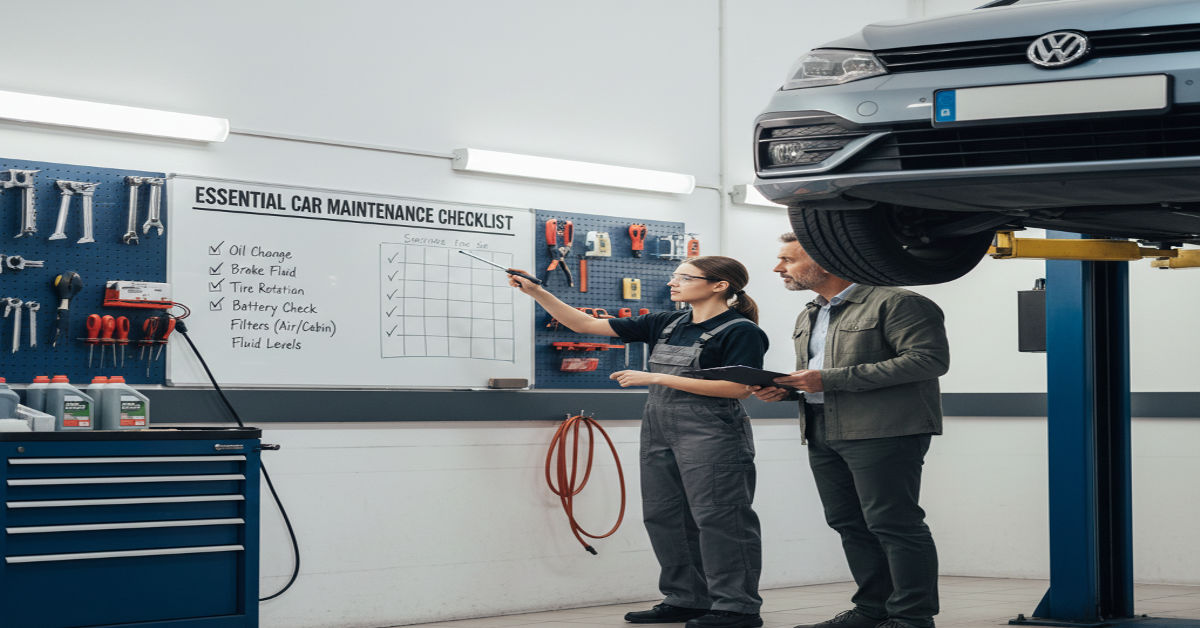
Owning a car is more than enjoying the freedom of the open road — it’s a commitment to consistent care. In this guide, you’ll learn exactly what to check, when to check it, and why it matters. Following a comprehensive car maintenance checklist is the most effective way to prevent breakdowns, ensure safety, reduce long-term costs and maintain your vehicle’s value.
Routine maintenance is not about random tinkering it’s a deliberate schedule of inspections, fluid checks, component replacements, and professional servicing. Cars that receive regular maintenance run efficiently, avoid surprises and contribute less to emissions and fuel wastage. Whether you are a new driver or a seasoned owner, understanding the logic behind a maintenance checklist — and adhering to it — transforms the way you care for your vehicle. From daily checks of tires and fluids to mile-based service milestones, this guide organizes maintenance into actionable routines that make car ownership safer and more economical.
Why Preventive Maintenance Matters
Preventive maintenance isn’t optional it is essential for vehicle longevity and driver safety. Experts consistently stress that routine service prevents minor issues from escalating into costly repairs. Regular inspections of engine oil, brake pads, fluids, tires, and filters are crucial for reliable performance.
Maintaining your vehicle improves efficiency, reduces fuel consumption, and lowers emissions. Beyond efficiency, safety is a core reason for adherence to a checklist. Well-maintained brakes, properly inflated tires, and functioning lights directly influence your ability to react to hazards. Cars that skip routine care experience more breakdowns, repairs, and potential safety risks, demonstrating that maintenance is as much about protection as it is about performance.
Monthly and Short-Term Checks
Some maintenance tasks are quick, high-impact, and should be done monthly or at every other fuel fill-up. Regular checks ensure early detection of issues and smooth operation.
Essential Monthly Inspections
| Item | Task | Importance |
| Engine oil | Use dipstick and top off if low | Prevents engine friction and overheating |
| Coolant | Check reservoir when engine cool | Prevents engine overheating and freezing damage |
| Tire pressure | Compare with recommended PSI | Ensures safe handling and fuel efficiency |
| Tire tread | Use a coin or tread gauge | Maintains traction and reduces accident risk |
| Lights | Inspect headlights, taillights, indicators | Ensures visibility and road communication |
| Windshield washer fluid | Top up | Maintains clear visibility in all conditions |
These small but critical steps prevent minor problems from becoming emergencies, protecting both the vehicle and the driver.
Quarterly and Intermediate Maintenance
Every 3–6 months, or approximately every 3,000–6,000 miles, deeper maintenance tasks should be performed. Some can be done at home; others may require professional assistance.
Key Quarterly Checks
| Task | Interval | Notes |
| Oil and filter change | 3,000–7,500 miles | Follow manufacturer’s guidance based on engine and oil type |
| Transmission fluid | 6,000–12,000 miles | Ensures smooth shifting and prevents transmission damage |
| Air filter replacement | 6,000–12,000 miles | Supports engine performance and fuel efficiency |
| Tire rotation | 6,000–8,000 miles | Promotes even tread wear |
| Battery inspection | Every 6 months | Clean terminals; replace if older than 3 years |
| Brake inspection | ~12,000 miles | Examine pads, fluid, and overall system function |
Intermediate maintenance ensures that everyday driving components remain functional, prolonging the vehicle’s life and reducing the likelihood of unexpected repairs.
Long-Term and Mileage-Based Service
Some maintenance is tied to cumulative mileage rather than time. These tasks address long-term wear and critical systems that deteriorate over time.
- 30,000 miles: Major fluid flushes, belt inspections, and brake service.
- 60,000 miles: Timing belt replacement, fuel system checks, and deeper brake system inspections.
- 90,000+ miles: Water pump replacements, suspension and steering system evaluation, and other significant components.
Adhering to these mileage-based schedules ensures your vehicle continues performing reliably and helps avoid costly failures that often arise when major components wear unnoticed.
Expert Insights
Automotive experts universally stress the value of routine maintenance. As Chaya Milchtein, an experienced automotive educator, notes: “If you don’t do your oil changes on time, check your tire pressure, or perform other preventive maintenance, your car is going to have more problems than it should.”
Veteran mechanic Scotty Kilmer recommends keeping a small maintenance log in your glovebox. Recording service dates and mileage not only prevents premature replacements but also safeguards resale value and ensures consistent care. Following manufacturer schedules, along with these practical habits, maximizes both performance and vehicle longevity.
Takeaways
- Regular maintenance safeguards safety, reliability, and vehicle value.
- Monthly checks of fluids, tires, and lights prevent many common issues.
- Intermediate service tasks like oil changes, filter replacements, and brake inspections maintain performance.
- Mileage-based maintenance protects critical systems from long-term wear.
- Maintaining detailed service records can save money and enhance resale value.
- Following your vehicle’s owner manual ensures precise intervals and procedures.
Conclusion
A well-maintained car offers peace of mind smooth operation, predictable performance, and confidence on the road. Achieving this requires discipline — a systematic approach to inspections, fluid checks, and professional service. Vehicles that follow recommended maintenance schedules last longer, cost less in repairs, and often achieve higher resale values.
Routine care also supports environmental efficiency, as properly maintained engines consume less fuel and reduce emissions. Most importantly, regular inspections reduce the risk of accidents caused by brake failure, worn tires, or other preventable issues. Whether you handle maintenance yourself or rely on a trusted mechanic, embracing a structured checklist empowers you to be a responsible informed driver.
FAQs
What is the most important car maintenance task?
Regular engine oil and filter changes are vital because oil lubricates and protects engine components.
How often should I check tire pressure?
Check at least once a month and before long trips to maintain safety and fuel efficiency.
Does regular maintenance increase resale value?
Yes, documented service history signals care and reliability, often improving resale price.
Can I do maintenance myself?
Yes, basic checks like fluids, tire pressure, and lights are DIY-friendly complex tasks often require professional service.
What happens if I skip scheduled maintenance?
Skipping service increases the likelihood of breakdowns, costly repairs and safety risks.
References
Capital Ford of Wilmington. (n.d.). The Importance Of Routine Maintenance And Servicing. Retrieved from https://www.capitalfordofwilmington.com/dont-neglect-your-car-the-importance-of-routine-maintenance-and-servicing.html Capital Ford of Wilmington
Chaya Milchtein, automotive educator quoted in Nasdaq. (n.d.). Automotive Expert: Ways to Reduce Auto Maintenance Costs. Retrieved from https://www.nasdaq.com/articles/im-an-automotive-expert%3A-here-are-10-ways-to-reduce-your-auto-maintenance-costs-in-the-new Nasdaq
Kelley Blue Book. (n.d.). Car Maintenance Guide: Everything You Need to Know. Retrieved from https://www.kbb.com/car-advice/maintenance-guide/ Kbb.com
Nationwide. (n.d.). Your Car Maintenance Checklist and Schedule. Retrieved from https://www.nationwide.com/lc/resources/auto-insurance/articles/car-maintenance-checklist Nationwide
Scotty Kilmer. (n.d.). Scotty Kilmer. Retrieved from https://en.wikipedia.org/wiki/Scotty_Kilmer Wikipedia
Bridgestone Tyres. (n.d.). The Ultimate Car Maintenance Checklist. Retrieved from https://www.bridgestonetyre.com.my/en/tyre-clinic/drivers-essential/ultimate-car-maintenance-checklist bridgestone