

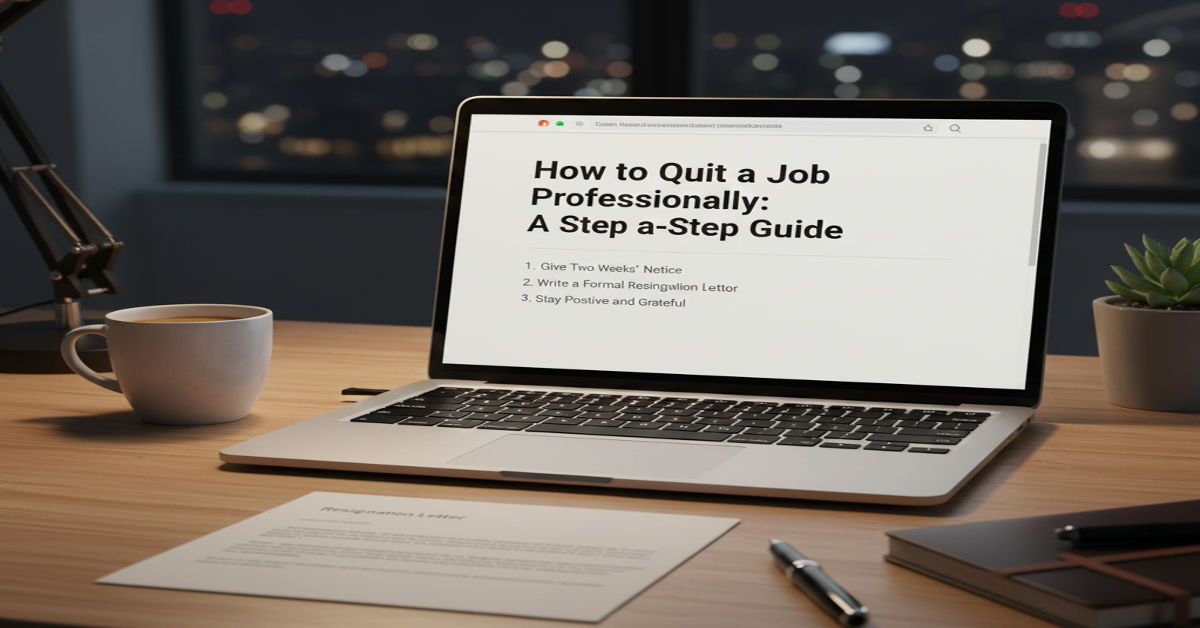
Quitting a job is more than just submitting a letter it’s a strategic career decision that can have lasting effects on your professional reputation and future opportunities. Done correctly, it demonstrates professionalism, strengthens networks and ensures you leave on good terms. Done poorly, it can burn bridges, jeopardize references or even impact legal or financial entitlements. Understanding how to quit a job is essential for anyone seeking a smooth respectful transition to their next role.
Before announcing your departure, it is critical to confirm that your decision is final. Secure a written offer from your next employer and review your current employment contract to verify notice period requirements, typically two weeks. Document ongoing projects, create handover materials and understand benefits such as final pay, unused leave and health insurance continuation. By preparing in advance, you reduce risk and maintain confidence during this sensitive transition.
Professional career coaches emphasize that leaving thoughtfully sets the tone for your ongoing professional relationships. How you resign often reflects more on your character than your daily work performance. Approaching your exit with intentionality ensures you maintain credibility and maximize long-term career prospects.
Step 1: Preparing to Resign
Before resigning, assess your motivations. Ask yourself if internal solutions—like role adjustments, promotions, or mentoring—might resolve your concerns. Once you confirm that leaving is the right choice, secure a formal offer from your next employer in writing. This guarantees income security and protects you from unexpected complications.
Review your employment contract carefully to understand your notice obligations, non-compete clauses, and confidentiality agreements. Awareness of these legal obligations will prevent disputes over final pay or benefits. Experts advise documenting ongoing responsibilities and preparing a clear transition plan to demonstrate accountability and professionalism during your notice period.
Step 2: Planning the Resignation Conversation
Resigning in person—or via video call if remote—is the preferred method. Schedule a private meeting with your direct manager and keep the discussion concise, positive, and professional. Clearly state your intention to resign, your last working day according to notice requirements, and your willingness to support the transition. Avoid detailing reasons for leaving unless asked directly and maintain a tone of gratitude.
Career advisors highlight that the resignation conversation is often remembered more than the resignation letter itself. Responding calmly to counteroffers or questions about your next role reinforces professionalism and ensures you leave on good terms.
Step 3: Writing a Professional Resignation Letter
Immediately following your conversation, submit a formal resignation letter. It should be brief, factual, and courteous. Include your intent to resign, your final working day, an expression of gratitude for opportunities, and an offer to assist with the handover. Avoid discussing your next job, expressing grievances, or providing lengthy explanations.
A clear resignation letter provides official documentation for HR purposes and demonstrates respect for formal procedures. Keep the letter to one page, concise, and professional, ensuring it supports your overall goal of a smooth exit.
Step 4: Understanding Legal and Contractual Obligations
Knowing your entitlements helps prevent disputes and ensures a smooth exit. Employees are generally entitled to their final salary, payment for unused leave and any applicable end-of-service benefits. Notice period obligations vary by role, with entry-level employees often giving two weeks, skilled professionals four weeks, and executives up to 12 weeks.
| Role/Industry | Typical Notice Period | Notes |
| Entry-Level | 2 weeks | Minimum requirement; contract may vary |
| Skilled Professional | 4 weeks | Standard for mid-level roles |
| Management/Executive | 6–12 weeks | Higher responsibility may extend notice |
| Contract/Project Work | Per contract clause | Dependent on project completion |
Understanding local labor laws ensures you receive full entitlements, such as payout for unused leave or final settlement. Confirming these details with HR prevents disputes and ensures compliance with contractual obligations.
Step 5: Serving Your Notice Period and Transitioning Work
Your notice period is a critical phase to demonstrate professionalism. Complete outstanding projects, document workflows, and train colleagues as needed. Preparing clear handover documentation—including project statuses, deadlines, contact information, and potential risks—ensures continuity for your team.
| Key Exit Entitlements | What It Covers | Typical Requirements |
| Final salary | Payment up to last working day | Fulfillment of notice and contract terms |
| Unused annual leave payout | Cash value of remaining leave | Company policy and local labor laws |
| End-of-service benefits | Gratuity based on tenure | Years of service and policy rules |
| Certificate of employment | Role and duration verification | HR clearance and documentation |
Diligence during this period preserves goodwill and leaves a lasting positive impression, which can influence references and future opportunities.
Step 6: Participating in Exit Interviews
If your organization offers an exit interview, approach it constructively. Provide feedback on processes and experiences without personal criticism. Use this opportunity to request references, clarify final pay, and confirm benefit continuation. Handling this process professionally supports your reputation and ensures your exit is fully documented.
Expert Insights
“Resigning is a career-defining moment. Approach it strategically to protect relationships and opportunities.” — Lindsey Pollak, Career Strategist
“Your behavior during the notice period is often more remembered than the resignation itself.” — Marshall Goldsmith, Executive Coach
“Clear understanding of entitlements prevents disputes and ensures a smooth exit process.” — Caroline Bien, Employment Lawyer
Key Takeaways
- Confirm your decision and secure written offers before announcing your resignation.
- Communicate your departure in person or via video with professionalism and gratitude.
- Submit a concise, formal resignation letter immediately after the conversation.
- Serve your notice period diligently, completing handover and documentation tasks.
- Understand legal and contractual obligations to ensure all final pay and benefits are received.
- Participate constructively in exit interviews to maintain strong professional relationships.
Conclusion
Learning how to quit a job professionally is essential for preserving your reputation and securing future opportunities. Thoughtful preparation, clear communication, and diligent transition work ensure that you leave on good terms. The way you exit a role often leaves a lasting impression, shaping references, network strength, and career trajectory. By following structured steps—from preparation to notice period and exit interview—you can transition confidently while maintaining credibility and professionalism. A well-executed resignation demonstrates character, foresight, and respect for colleagues, providing a strong foundation for the next chapter of your career.
FAQs
How much notice should I give?
Typically two weeks, though contracts or senior roles may require longer notice. Always review your employment agreement.
Do I need to explain why I’m leaving?
Not necessarily. Keep explanations professional and concise if asked, focusing on future growth rather than criticisms.
Can I resign immediately?
Immediate resignation is possible but may lead to deductions or penalties unless agreed with your employer.
Will I be paid for unused leave?
Most companies convert unused annual leave to cash as part of final pay, per policy and local law.
Should I attend an exit interview?
Yes. It’s an opportunity to provide constructive feedback, confirm final pay and request references.
References
Hays Experts. (n.d.). How to resign professionally. Hays. Retrieved from https://www.hays.com/career-advice/report/how-to-resign Hays USA
Indeed Career Guide. (n.d.). How to quit a job in a professional manner. Indeed. Retrieved from https://www.indeed.com/career-advice/starting-new-job/how-to-quit-a-job Indeed
JobHero. (n.d.). How to quit a job professionally. JobHero. Retrieved from https://www.jobhero.com/career-guides/careers/planning/how-to-quit-a-job JobHero
ChangeEngine. (n.d.). Final pay & benefits termination policy. ChangeEngine. Retrieved from https://www.changeengine.com/articles/guidelines-for-implementing-final-pay-and-benefits-termination-policy—a-primer-for-hr-leaders changeengine.com
UfilingGuide. (2023, September 21). Rights of employees after resignation. UfilingGuide. Retrieved from https://ufilingguide.co.za/rights-of-employees-after-resignation/