

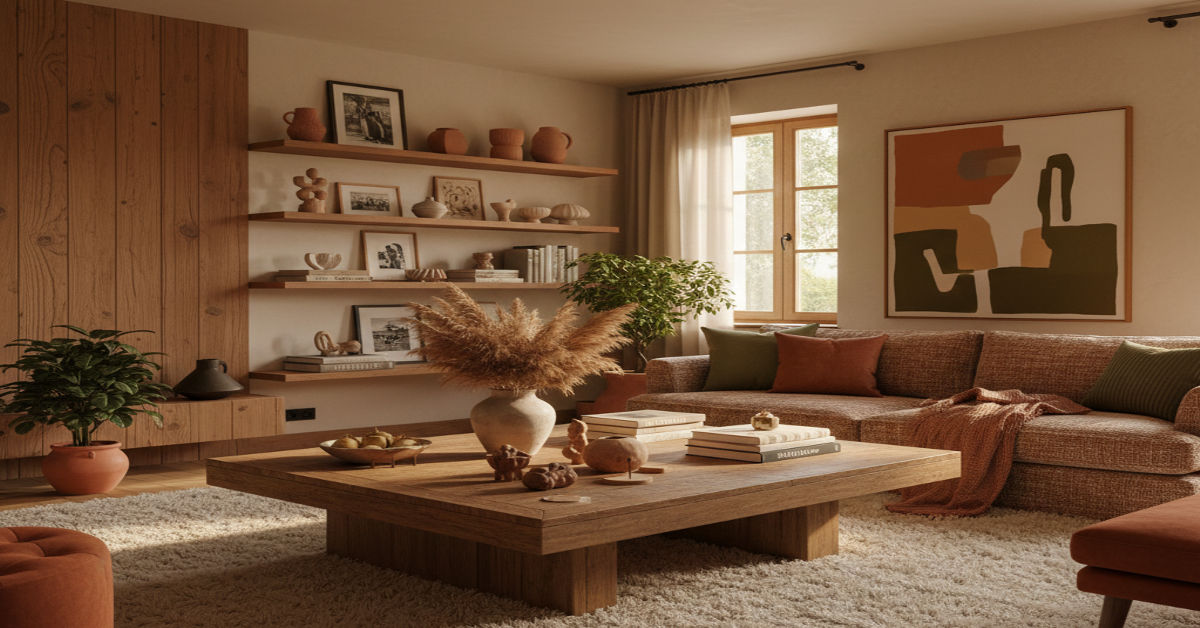
In 2026, interior design is moving past the sleek cold minimalism that dominated much of the past decade toward interiors that feel grounded, tactile and profoundly human. Homeowners and designers alike are embracing warmth over austerity, texture over flatness and personalization over a one-size-fits-all aesthetic. Across residential spaces, richer palettes—deep olives, terracottas, espresso browns, burgundy and moody blues—are replacing cool grays and stark whites, inviting emotional depth and comfort into every room. This shift reflects a broader cultural desire for sanctuary places that feel lived in expressive and connected to the natural world.
Similarly, design languages are favoring organic forms—curved sofas, arched doorways, and flowing fixtures—that soften architectural rigidity and visually reinforce comfort. Materials like handcrafted tiles, statement stones, patinated hardware and layered textiles add tactility, inviting touch as well as sight. In layout and function, modular and multifunctional elements support hybrid living while maintaining fluidity and defined zones. These trends redefine luxury as approachable, nuanced, and deeply personal, rejecting impersonal, catalogue-like perfection in favor of homes that tell the story of their inhabitants. Early adopters and mainstream design forecasts alike point toward interiors that balance practicality, coziness and individuality in 2026.
The Color Revolution: Warmth and Depth Over Cool Neutrals
In 2026 the color palette of interiors is embracing emotional nuance and connection. Gone are days dominated by cool grays and stark whites instead earth-inspired hues are thriving. Designers highlight deep olives, umber, ochre and smoky blues as atmospheres that ground and soothe.
| Color Trend | Description | Effect in Space |
| Terracotta & Clay | Warm, earthy pigments | Invites warmth and visual depth |
| Olive & Dark Green | Nature-linked tones | Calming, restorative feeling |
| Burgundy & Plum | Rich saturated hues | Adds sophistication and intimacy |
| Moody Blues | Deep atmospheric tones | Balances warmth with serene coolness |
Designers also forecast that color drenching—painting walls, trim, and even ceilings in a single tone—will transform rooms into immersive environments. These moody washes envelop spaces and create depth without clutter.
Expert designer Courtnay Tartt Elias notes that “earthy, old-European inspired colors and textured finishes” resonate with homeowners seeking spaces that feel restorative and grounded.
Materials and Texture: The New Foundation of Luxury
Premium materials in 2026 interiors aren’t shiny and slick; they’re tactile, imperfect, and storytelling. Natural stone, handcrafted tiles, and wood paneling are central elements that create sensory richness.
Materials like veined marble, quartzite, and clay provide visual rhythm and tactile interest that change throughout the day with shifting light. At the same time, handcrafted finishes—whether irregular tiles or patinated hardware—bring a sense of craftsmanship and authenticity to spaces.
“Textile and material layering offers the luxurious feel that spaces of 2026 aspire to—comfort and beauty rooted in the senses.” — Design expert commentary
Layering textiles—velvet, wool, linen, and cotton—has become a foundational design strategy rather than a finishing touch. This trend rejects flat surfaces in favor of dimensional complexity that invites human interaction.
The emphasis on organic materials is part of a broader cultural shift toward sustainable, meaningful design: interiors that not only look refined but age gracefully and reveal stories over time.
Furniture and Forms: Curves, Comfort and Human-Scale Design
As clean lines give way to organic shapes, furniture design in 2026 places comfort and flow at the forefront. Curved sofas, sculptural chairs, and asymmetrical tables soften spatial geometry and make rooms feel approachable.
Rounded edges and fluid forms help define spaces while maintaining visual continuity, a quality especially desirable in open-plan homes and hybrid living arrangements. These shapes encourage visual rest and ease of movement, countering the sharp angles of earlier modernist trends.
This shift to organic design is not merely aesthetic—the psychology of curves has long been associated with safety and calm. Designers leverage this innate human response to create interiors that feel supportive and peaceful.
Layout Innovations: Flexible Living and Defined Flow
Functional adaptability is a hallmark of 2026 interiors. Rather than large, open, undefined spaces, designers are using modular furniture as spatial anchors. Oversized corner sofas can delineate lounge areas from work zones without requiring walls, and custom joinery creates built-in storage that supports flow and organization.
Defined spaces are increasingly complemented by sculptural lighting and statement mirrors that add dimension without clutter. These elements enhance both utility and ambiance, weaving practicality with visual interest. Designers emphasize that homes must serve multiple functions—work, wellness, play—without feeling compartmentalized or rigid.
In small apartments especially, thoughtful zoning—through rugs, lighting, and furniture placement—maximizes usable space and creates areas that feel distinct yet cohesive.
What’s Out: The End of Impersonal Minimalism
Interior design in 2026 is a clear break from all-white schemes, overly neat catalog looks, and personality-free spaces. Designers urge abandoning mass-produced decor and monochromatic palettes that lack warmth or character.
Minimalism has not disappeared but evolved into warm minimalism—spaces that are uncluttered yet rich in texture and narrative. This approach values quality over quantity and prioritizes elements that evoke emotion and connection.
Expert Perspectives
Interior design professionals acknowledge this shift toward warmth and personalization:
“Warm minimalism blends clean lines with cozy materials and layered neutrals, making spaces feel lived in yet refined.” — Vistaar Designs trend report 2026
“Rich, saturated tones are becoming the new neutrals, connecting interiors to nature in a more grounded way.” — Vogue design insights 2026
“Material imperfection and natural textures tell a story of place and craftsmanship.” — Homes & Gardens color and materials forecast 2026
Trends at a Glance: 2026 Overview
| Trend Category | 2026 Direction |
| Colors | Earthy, rich, saturated palettes |
| Shapes | Curved, organic furniture forms |
| Materials | Natural stone, wood, handcrafted surfaces |
| Texture | Layered textiles and tactile finishes |
| Layout | Modular zoning and multifunctional spaces |
Takeaways
• Interiors in 2026 favor warm, expressive color palettes rooted in nature.
• Texture replaces surface flatness as the definition of luxury.
• Organic, curved furniture forms create spatial flow and comfort.
• Flexible layouts balance multifunctional needs with seamless aesthetics.
• Personalization and meaning outweigh sterile minimalism.
Conclusion
The interior design landscape in 2026 is defined by its human focus—spaces that feel warm, expressive and emotionally resonant. Where past trends prized sleek minimalism and neutral simplicity, this year’s interiors are layered with color, texture and personality. Natural materials and rich palettes not only create visual depth but support a sense of well-being and belonging. Modular layouts and organic forms acknowledge changing lifestyles while grounding spaces in sensory richness and thoughtful design. At its core, 2026 design is an invitation to dwell deeply: to create homes that are not just aesthetically pleasing but are emotional sanctuaries reflecting individual stories and lived experience.
FAQs
What colors are trending in 2026 interior design?
Warm earthy tones like terracotta, olive, burgundy, and moody blues are trending, replacing cool neutrals for more inviting spaces.
Is minimalism still relevant in 2026?
Yes, but as warm minimalism—clean yet textured and layered, prioritizing comfort over starkness.
How important is texture in 2026 trends?
Texture is central. Layered textiles and tactile surfaces define rooms more than flat, smooth finishes.
What role do organic shapes play in interiors this year?
They soften spaces, enhance flow, and evoke comfort, replacing rigid, angular aesthetics.
How can small apartments incorporate 2026 trends?
Use modular furniture and zoning techniques with rugs and lighting to create distinct yet cohesive areas.
References
Homesandgardens.com. (n.d.). Experts predict the interior color trends for 2026. Retrieved from https://www.homesandgardens.com/interior-design/color-trends-2026
Parade.com. (n.d.). 5 home design trends that will define 2026, according to interior designers. Retrieved from https://parade.com/living/home-design-trends-2026
Tracymorrisdesign.com. (n.d.). 2026 interior design trends and predictions. Retrieved from https://tracymorrisdesign.com/interior-design-trends-predictions-for-2026-colors-materials-styles-to-watch/
Vistaardesigns.com. (n.d.). Top interior design trends 2026. Retrieved from https://vistaardesigns.com/top-20-interior-design-trends-2026/
Vogue.com. (n.d.). The 11 key interior design trends set to define 2026. Retrieved from https://www.vogue.com/article/interior-design-trends-2026