

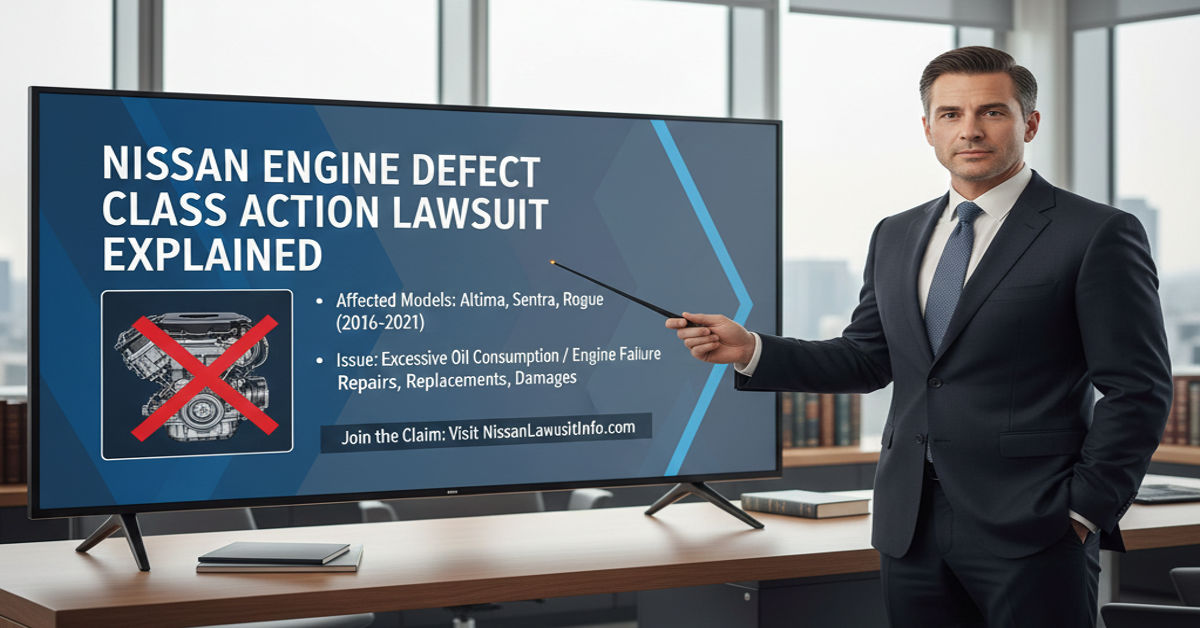
In late 2025, Nissan found itself at the center of a growing controversy as a class action lawsuit accused the automaker of selling vehicles with defective engines. The focus of the lawsuit is Nissan’s variable-compression turbo (VC‑Turbo) engines, marketed as a technological breakthrough blending fuel efficiency with performance. Plaintiffs allege that these engines harbor design flaws that can result in sudden failure, excessive oil consumption and even the release of gasoline fumes into the cabin creating both safety and health hazards.
Nissan is facing legal action for allegedly failing to inform customers about known engine problems and providing insufficient remedies. Nearly half a million vehicles have been recalled due to potential engine bearing defects, yet affected owners argue that Nissan’s responses—limited to inspections and minor repairs—do not address the underlying problem. This case underscores a tension between innovative automotive technology and the responsibility to ensure reliability and consumer safety.
This investigation examines the mechanics behind VC‑Turbo engines, the allegations raised by plaintiffs, Nissan’s official response and the broader implications for automotive engineering, regulatory oversight and consumer trust.
The Rise and Controversy of the VC‑Turbo Engine
Nissan introduced the VC‑Turbo engine as a cutting-edge powerplant. These engines, including the 1.5-liter KR15DDT and 2.0-liter KR20DDET, adjust their compression ratio dynamically, promising improved fuel efficiency without compromising power. Yet, according to the class action complaint, these engines suffer from critical flaws in the bearings and compression link mechanisms. The defects reportedly cause knocking sounds, high-pitched whirring, excessive oil loss, and in some cases, catastrophic engine failure.
Plaintiffs claim that Nissan was aware of these defects prior to selling the vehicles but chose not to disclose the risks, leading to repeated breakdowns for consumers. Early dealership repairs often involved temporary fixes, leaving the root cause unaddressed. This has raised questions about corporate transparency and the adequacy of recall remedies.
Timeline of Defect Allegations, Recalls, and Legal Actions
| Date | Event | Significance |
| Oct 2021 | VC‑Turbo engine models released | Nissan introduces variable-compression technology in select vehicles. |
| Dec 2023 | NHTSA investigates engine failures | Regulatory scrutiny begins after reports of VC‑Turbo malfunctions. |
| Jun 2025 | Recall issued | Approximately 443,899 vehicles recalled for potential engine bearing defects. |
| Mid-2025 | Class action lawsuit filed | Plaintiffs allege Nissan concealed defects and offered inadequate remedies. |
| 2025–2026 | Ongoing litigation | Discovery and pretrial proceedings continue, with unresolved questions of remedy scope. |
Plaintiff Allegations and Reported Symptoms
Vehicle owners involved in the lawsuit report numerous issues, including sudden loss of power, engine stalling, excessive oil consumption, and unusual noises. Many describe repeated visits to dealerships where minor repairs or software updates temporarily alleviated symptoms but did not resolve the root defect.
Another focus of litigation involves the Positive Crankcase Ventilation (PCV) system in 2022–2023 Nissan Rogues. Allegedly, this system allows gasoline fumes to enter the cabin, producing a strong odor and potential health risks. Owners argue that Nissan has failed to recall or adequately repair these defects under warranty, highlighting a broader concern over consumer safety and corporate accountability.
Nissan’s Response and Recall Measures
In response to mounting complaints, Nissan announced a recall in mid‑2025 affecting approximately 443,899 vehicles in the U.S. and Canada. The recall targeted potential bearing defects in VC‑Turbo engines and offered inspections, repairs, and part replacements where necessary. Affected models include the 2021–2024 Nissan Rogue, 2019–2020 Altima, and select Infiniti vehicles.
Nissan stated that only a small fraction—about 1.2%—of affected vehicles might experience engine bearing failures. Critics, however, argue that this underestimates real-world risks, as many owners continue to face recurring failures despite recall remedies. The limited scope of Nissan’s response is central to the plaintiffs’ claims that the company has not adequately addressed the defects.
Legal Implications and Claims
The class action lawsuit alleges multiple legal violations, including breach of warranty, fraud by omission and violations of consumer protection laws. Plaintiffs seek compensatory damages, reimbursement for repair costs, extended warranties, and injunctive relief requiring more substantial engine repairs or replacements.
Legal analysts suggest that the outcome of this case could hinge on whether plaintiffs can prove that Nissan knew about the defects and failed to act, potentially setting a precedent for future cases involving variable-compression engine technology and manufacturer accountability.
Expert Insights
“Variable compression engines are inherently complex, and small design flaws can cascade into major reliability issues. The allegations in this case reflect common patterns of component fatigue.”
— Dr. Linda Baxter, Automotive Engineering Professor, University of Michigan
“Consumer protection laws exist to ensure buyers are informed of latent defects. If Nissan had data demonstrating persistent engine issues and failed to disclose them, plaintiffs have a strong case.”
— Mark Jensen, Consumer Law Analyst
“A recall that focuses on superficial repairs without addressing core defects often sparks litigation rather than resolves it. Owners understandably lose trust when temporary fixes fail.”
— Teresa Chu, Automotive Safety Consultant
Consumer Experiences
Owners across forums and complaint boards recount frustration over repeated failures, costly repairs, and dealerships’ limited willingness to address the underlying problem. Many describe being stranded or forced to pay unexpected repair costs, illustrating the human impact of the defective VC‑Turbo engines. The lawsuit and ongoing recalls highlight the tension between advanced engineering promises and real-world reliability.
Comparison of Defective Engine Features and Recall Remedies
| Issue | Plaintiff Experience | Recall Remedy |
| Engine bearing failure | Knocking sounds, high-pitched whirring, occasional stalls | Inspection, part replacement where needed |
| Oil consumption | Excessive oil loss between services | Dealer check, minor gasket replacement |
| Cabin fumes (PCV system) | Gasoline odor, potential health risk | No full recall; advisory only |
| Software glitches | Temporary power loss fixes | Dealer software updates |
| Engine seizure | Complete engine stop in severe cases | Engine replacement if verified during recall |
Takeaways
- Nissan’s VC‑Turbo engines are alleged to have critical design flaws affecting safety and reliability.
- Recalls address some symptoms but may not resolve underlying issues.
- Plaintiffs claim breach of warranty, non-disclosure of known defects, and inadequate remedies.
- Owners report consistent problems including engine noise, stalling, and gasoline fumes in the cabin.
- Litigation outcomes may set a precedent for manufacturer accountability and vehicle technology disclosure.
Conclusion
The Nissan class action lawsuit sheds light on the delicate balance between engineering innovation and consumer safety. While VC‑Turbo engines promised enhanced performance and efficiency, plaintiffs allege that design flaws compromise reliability, safety, and trust. Nissan’s recall addresses some concerns, but many owners remain frustrated with temporary fixes and repeated failures. The case highlights the critical role of transparency, rigorous engineering standards, and meaningful legal remedies in maintaining consumer confidence. As litigation unfolds, its outcome may influence not only Nissan’s reputation but broader expectations for automotive innovation and accountability.
FAQs
1. Which Nissan models are affected?
The lawsuit primarily involves 2021–2024 Nissan Rogue, 2019–2023 Nissan Altima, and select 2019–2023 Infiniti QX50 vehicles with VC‑Turbo engines.
2. What engine defects are alleged?
Defects include engine bearing failure, excessive oil consumption, sudden stalling, unusual noises, and gasoline fumes entering the cabin.
3. Has Nissan issued a recall?
Yes, in mid‑2025, Nissan recalled approximately 443,899 vehicles for potential engine bearing defects, providing inspections and repairs.
4. What remedies are plaintiffs seeking?
The lawsuit seeks damages, repair reimbursements, extended warranties, and more comprehensive engine replacements.
5. How can owners join the class action?
Eligible owners must provide proof of ownership of affected models; notices will outline filing deadlines and procedures.
REFERENCES
ClassAction.org. (n.d.). Strong gas smell inside 2022–2023 Nissan Rogue caused by PCV system defect, class action claims. https://www.classaction.org/news/strong-gas-smell-inside-2022-2023-nissan-rogue-caused-by-pcv-system-defect-class-action-claims ClassAction
ClassAction.org. (n.d.). Nissan concealed engine defect in certain Rogue, Altima, Infiniti QX50 models, class action lawsuit claims. https://www.classaction.org/news/nissan-concealed-engine-defect-in-certain-rogue-altima-infiniti-qx50-models-class-action-lawsuit-claims ClassAction
LawyersInventory.com. (2025). Nissan faces class action lawsuit over alleged VC‑Turbo engine defect. https://www.thelemonfirm.com/2025/12/11/nissan-faces-class-action-lawsuit-over-alleged-vc-turbo-engine-defect/ California Consumer Attorneys, P.C.
United States District Court. (2025). Elias et al. v. Nissan North America, Inc. https://www.classaction.org/media/elias-et-al-v-nissan-north-america-inc.pdf ClassAction
NHTSA/Reuters. (2025, July 21). NHTSA closes engine failure probe into Nissan vehicles. Reuters. https://www.reuters.com/business/autos-transportation/nhtsa-closes-engine-failure-probe-into-454840-nissan-vehicles-2025-07-21/ Reuters