

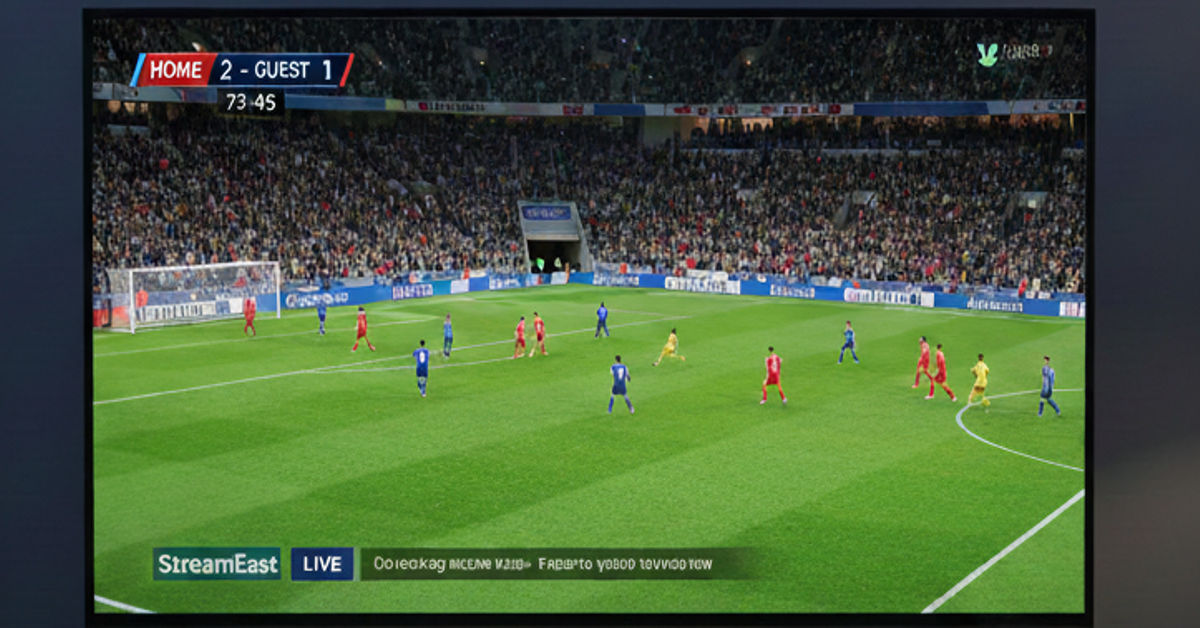
For years, a quiet ritual played out across living rooms, dorms and smartphones worldwide. Minutes before kickoff, fans typed the same phrase into search bars—StreamEast soccer—hoping for a working link before the referee’s whistle. What they found was not a broadcaster or an app but a loose constellation of webpages offering free access to matches that usually sat behind expensive subscriptions.
StreamEast did not invent sports piracy, but it perfected accessibility. With a clean interface, no registration, and dozens of mirror links for each match, it became one of the most recognizable names in illicit soccer streaming. Premier League derbies, Champions League knockouts, international tournaments—everything appeared to be there, instantly and without cost.
The appeal was obvious. Modern soccer fandom has become fragmented across platforms, regions, and paywalls. Watching one club’s full season can require multiple subscriptions, each priced beyond the reach of many supporters. StreamEast filled that gap offering a simple solution to a complicated market.
Yet convenience masked consequence. The platform operated entirely outside licensing laws, exposed users to security risks, and generated revenue through opaque advertising systems. Its eventual takedown marked not just the fall of a website, but a turning point in the global fight over who controls live sports—and who gets to watch.
What StreamEast Was—and Wasn’t
StreamEast was not a streaming service in the conventional sense. It did not produce broadcasts, employ commentators, or negotiate rights deals. Instead, it functioned as an aggregator: a directory of links pointing to live streams hosted elsewhere. This technical distinction helped it grow quickly and evade immediate shutdowns, as responsibility for the actual stream was diffused across many sources.
To users, however, these distinctions were irrelevant. StreamEast felt like a service. Matches were categorized by league, kickoff times were clearly listed, and multiple links were offered in case one failed. The site worked on phones, laptops, and smart TVs through browsers, requiring little technical skill.
What it was not, critically, was legal. None of the content was licensed. Every match streamed through the site infringed on broadcast rights owned by leagues, clubs, and media companies that had paid billions for exclusivity. This reality placed StreamEast squarely in the crosshairs of rights holders—even as its audience continued to grow.
Why Soccer Fans Flocked to It
Soccer’s global popularity makes it uniquely vulnerable to piracy. Unlike many American sports, top leagues are followed intensely across borders, yet broadcast rights are sold country by country. A fan living abroad may find their local broadcaster does not carry their favorite league—or charges a premium for access.
At the same time, subscription fatigue has become real. Fans are asked to pay for multiple platforms to follow domestic leagues, European competitions, and international tournaments. For younger viewers especially, free online alternatives feel less like theft and more like adaptation.
StreamEast capitalized on this sentiment. It asked for nothing but attention—attention it monetized through ads. In doing so, it normalized a behavior that many users viewed as harmless: watching a game they loved, even if the path to it was unofficial.
The Economics Behind the Piracy
The business model behind StreamEast was simple and effective. Traffic translated into advertising revenue. The more users tuned in for big matches, the more valuable the site became to advertisers willing to operate in gray or black markets.
This economy thrived on scale rather than trust. Pop-up ads, redirects, and aggressive banners were common. Some led to legitimate but intrusive marketing; others pushed questionable downloads or deceptive offers. Unlike licensed platforms, there were no consumer protections, no customer support, and no accountability.
For rights holders, the damage was not theoretical. Piracy undermines the value of broadcast deals, which fund everything from player wages to grassroots development. When millions watch for free, the entire financial ecosystem of the sport is affected.
Legal Pressure and the Shutdown
StreamEast survived for years by constantly shifting domains and infrastructure. When one address was blocked, another appeared. This whack-a-mole dynamic frustrated regulators and emboldened users, who came to view the site as indestructible.
That illusion ended when coordinated enforcement finally caught up. Authorities targeted not just domains, but the people and financial systems behind them. Servers were seized, accounts frozen, and the central network dismantled. For the first time, visitors encountered not a list of matches, but a stark notice redirecting them to legal viewing options.
The takedown sent a message: piracy at scale would no longer be treated as a nuisance, but as organized commercial infringement. It also signaled a shift toward international cooperation, recognizing that digital piracy ignores borders even if laws do not.
The Hidden Risks for Users
Beyond legality, StreamEast carried personal risks that many users underestimated. Unlicensed sites often lack basic security standards. Malicious ads can exploit browser vulnerabilities. Fake “play” buttons can lead to phishing pages. Data can be tracked and sold without consent.
Because StreamEast spawned countless imitators, users searching for the site often landed on clones with far worse intentions. The absence of an official app or verified domain made it difficult to know which version—if any—was authentic.
In contrast, licensed platforms invest heavily in encryption, privacy compliance, and user protection. The difference is invisible until something goes wrong.
StreamEast Compared to Legal Platforms
| User Experience Factor | StreamEast | Official Services | |||
| Video Quality | Variable | Consistent HD | |||
| Ads | Aggressive | Controlled or none | |||
| Support | None | Customer service | |||
| Longevity | Uncertain | Contract-backed | |||
These contrasts explain why piracy persists—and why it struggles to replace official platforms entirely.
What StreamEast Revealed About Modern Sports Media
StreamEast was not just a pirate site; it was a symptom. Its popularity exposed dissatisfaction with how soccer is distributed and priced. Fans want simplicity: one place, one price, global access. Instead, they face fragmentation and regional restrictions that feel outdated in a borderless internet era.
Broadcasters argue that rights sales fund the sport. Fans counter that the system excludes them. Between these positions lies a growing tension that enforcement alone cannot resolve.
Takeaways
- StreamEast became popular by offering free, simple access to soccer across leagues and regions.
- Its operation relied entirely on unauthorized streams and advertising revenue.
- Users faced legal, security, and privacy risks often overlooked in the moment.
- The shutdown marked a shift toward more coordinated global anti-piracy enforcement.
- Persistent demand suggests underlying problems in sports media distribution remain unresolved.
- Legal platforms offer stability and protection but struggle with affordability and fragmentation.
Conclusion
The rise and fall of StreamEast captures a pivotal moment in digital sports culture. It showed how easily technology can bypass traditional gatekeepers—and how quickly those gatekeepers can respond when economic stakes are threatened. For fans, the site offered liberation from paywalls for leagues and broadcasters, it represented erosion of value.
Its disappearance has not ended piracy, nor has it solved the frustrations that drove fans there in the first place. Instead, it leaves an open question: can the soccer industry evolve fast enough to meet global demand without pushing fans back into the shadows?
The answer will shape not only how matches are watched, but who gets to watch them at all.
Frequently Asked Questions
What was StreamEast used for?
It was used to watch live soccer and other sports for free through unlicensed online streams.
Was using StreamEast illegal?
In many countries, accessing unlicensed streams violates copyright law, even if users are rarely prosecuted.
Why did StreamEast shut down?
Authorities targeted its operators and infrastructure as part of a coordinated anti-piracy effort.
Are StreamEast alternatives safe?
Most unlicensed streaming sites carry similar legal and security risks.
What is the safest way to watch soccer online?
Using licensed broadcasters or official league streaming services offers legality, reliability, and protection.
REFERENCES
Alliance for Creativity and Entertainment. (2025, September 3). Notorious online soccer piracy network Streameast shut down. AP News. https://apnews.com/article/e90321f28fc061fdeac96acf2a258af7 AP News
The Verge. (2025, September 3). Sports streaming hub Streameast ‘shut down’ in sting. https://www.theverge.com/news/770275/sports-streaming-hub-streameast-shut-down-in-sting The Verge
New York Post. (2025, September 3). Notorious sports streaming website shut down as alleged $6 million scheme exposed. https://nypost.com/2025/09/03/sports/notorious-sports-streaming-website-shut-down-as-alleged-6-million-scheme-exposed/ New York Post
Poki Games. (n.d.). Everything you should know about StreamEast before using it. https://pokigames.it.com/everything-you-should-know-about-streameast-before-using-it/ Poki Games –
InternetOutsider.com. (n.d.). Stream East alternatives | Free live sport. https://www.internetoutsider.com/streameast/ internetoutsider.com
LiverpoolBuzz. (n.d.). Streameast Soccer: The ultimate guide. https://liverpoolbuzz.co.uk/streameast-soccer/ Liverpool Buzz
Slither-io.com. (n.d.). StreamEast Soccer: Everything you need to know in 2025. https://slither-io.com/streameast-soccer/ slither-io
Techraisal.com. (n.d.). StreamEast app and website explained. https://www.techraisal.com/blog/streameast-review/ TechRaisal
ZegoCloud. (n.d.). What is StreamEast? https://www.zegocloud.com/blog/streameast ZEGOCLOUD
Economic Times. (2025). Streameast shutdown: End of an era — Streameast, largest illegal sports streaming hub, shut down by authorities. https://m.economictimes.com/news/international/us/end-of-an-era-streameast-largest-illegal-sports-streaming-hub-shut-down-by-authorities/amp_articleshow/123684839.cms m.economictimes.com