

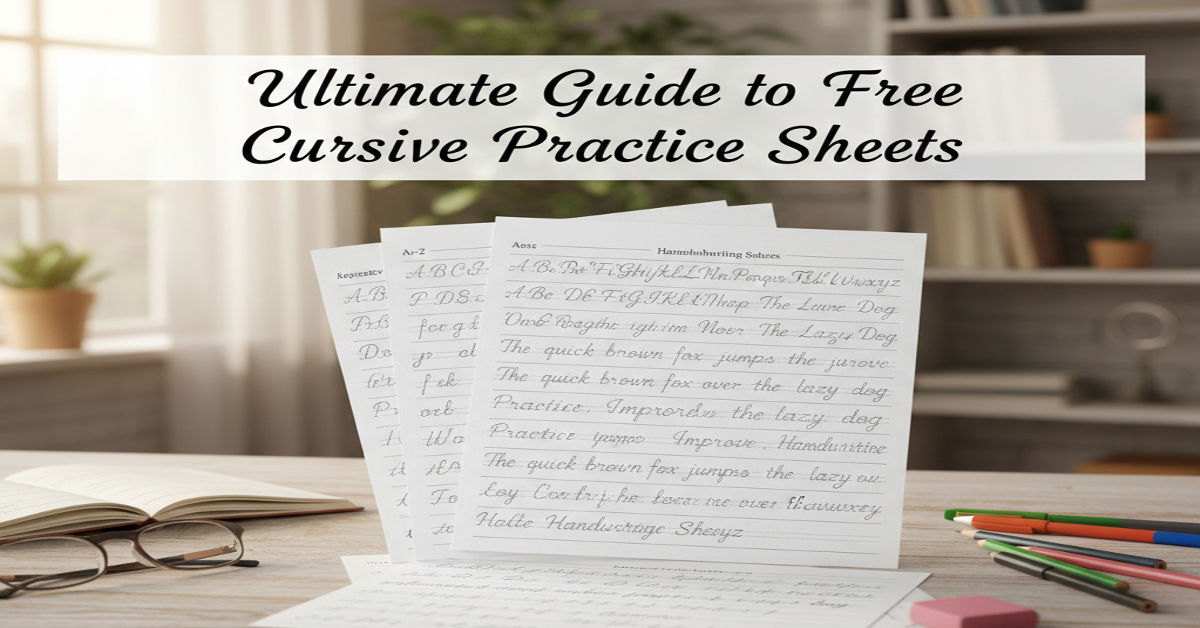
In an age dominated by touchscreens and keyboards, the gentle loop of cursive handwriting can feel almost anachronistic. Yet for learners and adults alike, cursive practice sheets remain one of the most effective tools for mastering fluid, legible script. Picking up a pencil and tracing graceful lowercase “a”s and uppercase “L”s on dotted guides, beginners begin to activate the neural pathways and muscle memory necessary for smooth letter formation. These worksheets serve not just children in elementary school but adults reconnecting with a skill often forgotten after early education. They reinforce the continuous motion that defines cursive: letters connected with rhythm, cadence and intentional stroke patterns.
Cursive practice sheets typically start with individual letter tracing, progress to joins and letter combinations, and culminate in complete words and sentences. Because they balance repetition with gentle guidance, these resources make handwriting practice both structured and approachable. Increased comfort with cursive doesn’t just improve aesthetic appeal research suggests handwriting engages cognitive processes differently than typing, strengthening memory and fine motor control. In this guide you’ll find the top free resources for cursive sheets, tips from educators and handwriting specialists, structured comparisons to help you choose what’s right for your skill level, and practical step‑by‑step advice for meaningful practice. By the end you’ll see how a simple stack of worksheets can transform penmanship with disciplined use.
The case for cursive practice sheets
Cursive practice sheets anchor the learning process by breaking handwriting down into manageable components. Worksheets that center on one letter at a time with dotted tracings help beginners internalize proper stroke sequences and letter shapes before freehand writing. According to free online tools like K5 Learning, users can access printable worksheets for cursive alphabets, letter joins, words, and sentences designed to build skills progressively. This progressive structure aligns with developmental best practices in handwriting instruction.
Practitioners emphasize that cursive has benefits beyond aesthetics. Writing in cursive can enhance fine motor skills and encourage sustained focus. A compilation of cursive writing sheets noted that continuous cursive flow engages hand‑eye coordination and offers cognitive benefits that support literacy more broadly.
Experts note also that practice doesn’t have to be monotonous. Custom worksheet generators let teachers and learners craft practice pages with names, favorite words, or phrases, adding personalization to the repetition that makes practice effective.
Free resources for beginners and advanced learners
| Resource | Features | Best for |
| K5 Learning | Free printable cursive sheets for letters, joins, words and sentences | Structured progression for kids |
| HandwritingPracticeSheets.com | Customizable PDF generator with tracing & freehand options | Tailored practice at any level |
| Reading Vine cursive PDFs | Ready‑made sheets with cognitive benefit guidance | Educational context alongside worksheets |
| Super Teacher Worksheets | Individual letter pages & sentence practice | Detailed letter‑by‑letter focus |
Across these platforms learners can find lowercase and uppercase practice, letter joins, and complete sentences to copy and practice, making it easy to scaffold instruction from foundational forms to fluent writing.
Expert perspectives on handwriting practice
Handwriting specialists argue that cursive practice strengthens neural circuits associated with literacy and fine motor control. “The act of forming letters by hand engages different brain regions than typing, encouraging deeper cognitive processing of language,” says Dr. Laura Reynolds, an educational psychologist specializing in literacy. According to occupational therapist Maria Delgado, “For many learners, the rhythm and continuous flow of cursive can reduce letter reversals and improve writing speed over time.”
These assertions are supported by research linking handwriting to academic performance; while not exclusive to cursive, studies show that students who write by hand retain information differently than those who rely solely on keyboards.
Comparing practice sheet approaches
| Approach | Strengths | Considerations |
| Letter tracing sheets | Builds foundational shapes, low frustration | Must transition to freehand soon |
| Custom text generators | Personalized and engaging | Requires typing and setup time |
| Sentence practice sheets | Encourages fluency and legibility | May overwhelm absolute beginners |
| Themed worksheets (e.g. animals, seasons) | Engages young learners | Less focused on stroke mechanics |
Many educators suggest starting with tracing before progressing to freehand, moving from isolated letters to joins and complete words. Apps or printable collections with thematic content can make longer practice sessions more enjoyable, especially for young learners.
Best practices for effective cursive practice
Start with lowercase letters; these form the backbone of fluent writing. Use guides with dotted letters to trace before attempting to write freehand on lined paper. When you feel comfortable with individual letters, practice common letter combinations such as “th,” “le,” and “ing” to build flow. Sites with custom worksheet generators allow you to choose text you find meaningful, which increases engagement and persistence.
Physical posture matters too: sit with a relaxed grip, a slight forward lean, and align paper at a comfortable angle. Frequent breaks during practice sessions help prevent fatigue. Finally, consistent practice—ideally a few minutes daily—yields better results than occasional, lengthy sessions.
Takeaways
• Cursive practice sheets break handwriting into manageable learning stages to build fluency and confidence.
• Free resources like K5 Learning and custom PDF generators offer accessible tools for all skill levels.
• Expert educators emphasize that handwriting engages different cognitive processes than typing and supports literacy.
• Personalizing practice with words and phrases increases learner motivation.
• Consistent, daily practice with progression from tracing to freehand yields meaningful improvement.
Conclusion
Cursive practice sheets are more than nostalgic remnants of old classroom rituals. They offer a structured, evidence‑based way to build handwriting skills that support cognitive development, fine motor control, and personal expression. By starting with guided tracing and progressing to freehand sentences, learners of all ages can develop a confident cursive style that endures beyond the practice page. With a wealth of free printable resources available, it’s easier than ever to integrate cursive practice into everyday learning. Whether for a child just beginning or an adult revisiting a forgotten skill, the path to fluent handwriting begins with intentional practice and repetition guided by well‑designed worksheets.
FAQs
What age should cursive practice begin?
Most students are introduced to cursive around ages 7 to 9, once they have foundational printing skills, but adults of any age can benefit from structured practice.
Are printable cursive worksheets free?
Yes, many sites offer free printable PDF cursive worksheets ranging from individual letters to sentences.
Can adults use cursive practice sheets?
Absolutely; adults refreshing or refining cursive benefit from structured repetition and tracing sheets.
Do cursive worksheets help cognitive skills?
Handwriting practice engages neural circuits tied to literacy and motor control, offering benefits beyond penmanship.
How often should I practice cursive handwriting?
Consistent daily sessions of 10–15 minutes are more effective than infrequent extended practice.
REFERENCES
K5 Learning. (2026). Free cursive writing worksheets. https://www.k5learning.com/cursive-writing-worksheets
HandwritingPracticeSheets.com. (n.d.). Free cursive practice sheets. https://www.handwritingpracticesheets.com/cursive-practice-sheets
Super Teacher Worksheets. (2026). Cursive handwriting worksheets. https://www.superteacherworksheets.com/cursive.html
Reading Vine. (2026). Cursive writing practice sheets. https://www.readingvine.com/collections/cursive-writing-practice-sheets-pdf/